Contents · Jump to a section
Design.com is the better AI image generator for marketing graphics in our 2026 comparison. Both platforms performed well in prompt accuracy and text rendering, but Design.com delivered stronger image quality, more consistent branding, and marketing-ready designs requiring significantly less editing.
Both AI image generators were tested using the same fictional skincare brand, Luna Botanicals. We evaluated their ability to create a professional Instagram advertisement and a matching website banner.
The results revealed an important difference: Ideogram is effective at generating attractive AI images, while Design.com is better at turning those images into finished marketing graphics.
Quick Verdict: Design.com vs Ideogram
| Category | Design.com | Ideogram | Winner |
| Prompt accuracy | 9/10 | 9/10 | Tie |
| Image quality | 10/10 | 8/10 | Design.com |
| Text accuracy | 10/10 | 10/10 | Tie |
| Brand consistency | 10/10 | 9/10 | Design.com |
| Marketing readiness | 10/10 | 5/10 | Design.com |
| Ease of editing | 10/10 | 5/10 | Design.com |
| Overall average | 9.8/10 | 7.7/10 | Design.com |
Overall winner: Design.com. It won four of the six evaluation categories, with the remaining two ending in ties.
Ideogram remains a strong alternative for typography-focused AI imagery and users who prefer a straightforward image-generation workflow.
How We Tested Design.com and Ideogram
We created a fictional organic skincare company called Luna Botanicals, launching a collection of soaps and body lotions called Botanical Glow.
The brand’s visual identity featured sage green, cream, and beige colors, natural botanical elements, elegant typography, and a premium aesthetic.
We gave both platforms two marketing tasks:
- Test 1: Instagram advertisement. Create a square promotional image featuring lotion, handmade soap, eucalyptus leaves, and the headline “NATURALLY RADIANT SKIN.”
- Test 2: Website banner. Create a horizontal promotional graphic featuring the same products and visual identity, with the headline “GLOW NATURALLY.”
We scored each platform across six equally weighted criteria: prompt accuracy, image quality, text accuracy, brand consistency, marketing readiness, and ease of editing.
The scores reflect our specific Luna Botanicals tests rather than universal ratings of either platform.
Round 1: Which AI Image Generator Follows Prompts Better?
Winner: Tie — 9/10 each
Both platforms successfully interpreted the creative direction and produced images that matched Luna Botanicals’ premium skincare aesthetic.
However, their workflows differed.
Design.com
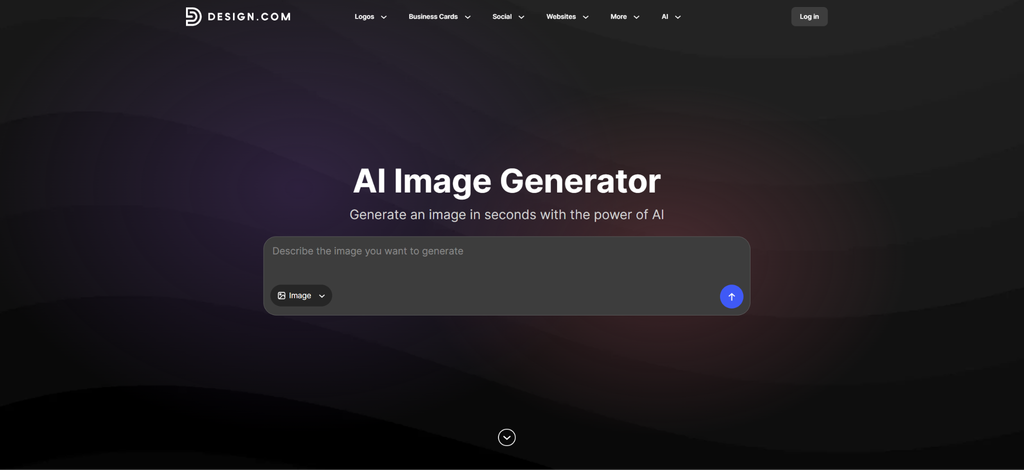
Design.com’s AI image generator accepts everyday-language descriptions covering subjects, lighting, composition, colors, and visual styles.
Its output followed our creative brief closely, but we encountered one inconvenience.
When the prompt mentioned “Instagram,” the platform redirected us to its dedicated social media design tool. Similarly, mentioning “website” during the second test triggered its website builder.
We had to remove those terms to generate images directly.
Ideogram
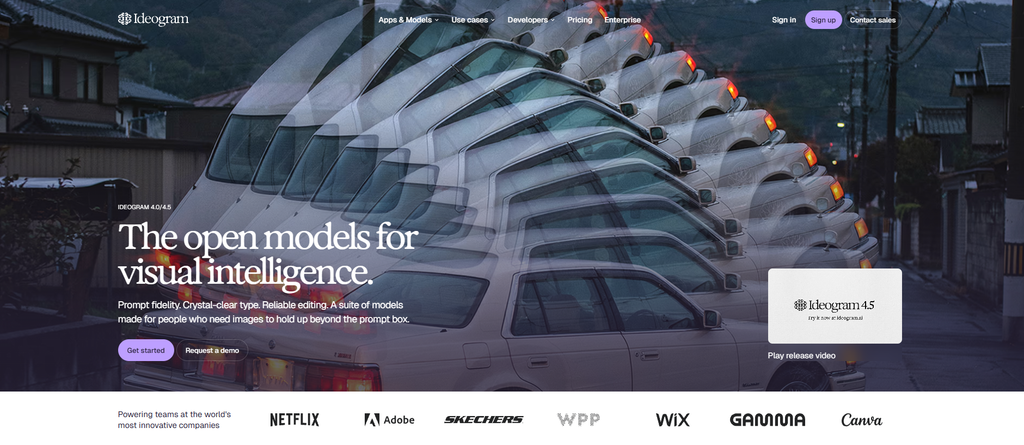
Ideogram accepted both original prompts without requiring changes.
It generated four concepts for each task, maintaining the requested botanical aesthetic, product arrangement, and promotional text.
This made Ideogram’s initial prompting process more straightforward.
Verdict: Both scored 9/10 for prompt accuracy. Ideogram handled our original prompts more directly, while Design.com required minor wording adjustments but produced highly relevant results.
Round 2: Which Creates Better Marketing Images?
Winner: Design.com — 10/10 vs 8/10
Image quality was one of the clearest differences in our comparison.
For the Instagram advertisement, we requested realistic skincare products arranged on natural stone with botanical decorations and soft sunlight.
Design.com: Polished, Professional Product Imagery
Design.com produced an advertisement that looked remarkably close to a finished skincare campaign.
The lotion bottle and handmade soap were arranged naturally among eucalyptus leaves and white flowers. Warm lighting, realistic product textures, and a balanced composition created an attractive premium aesthetic.
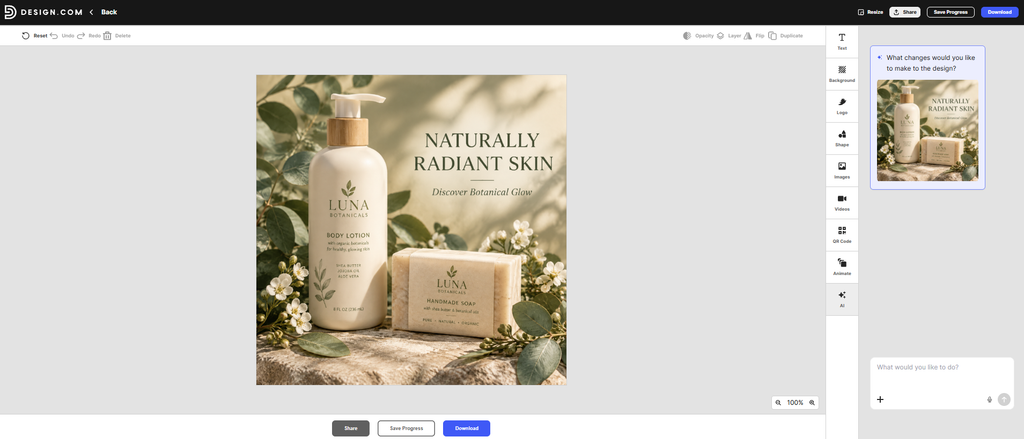
The packaging was particularly impressive.
Rather than generating plain containers, Design.com included branding details and product information that made the lotion and soap appear like actual retail products.
This reduced the amount of work needed to make the image suitable for marketing.
Ideogram: Attractive but Less Refined
Ideogram generated four minimalist advertisements.
The images successfully captured the botanical theme, featuring cream-colored products, natural surfaces, and subdued colors.
However, the results were less consistent.
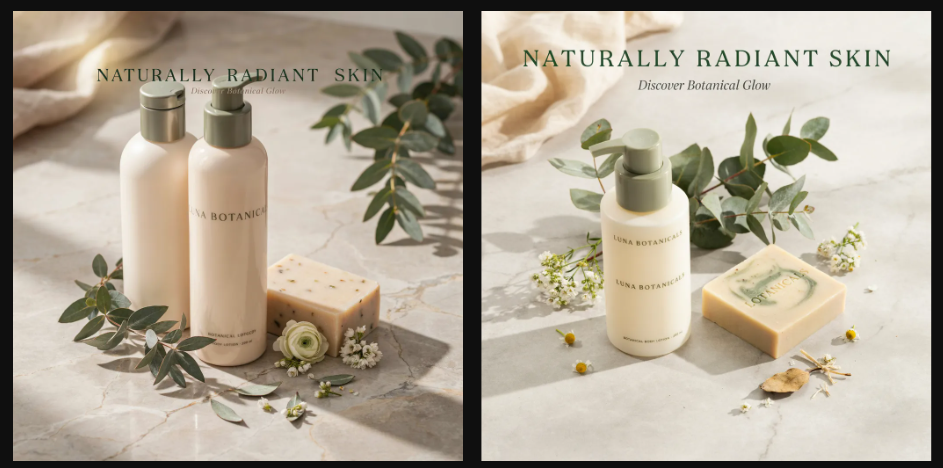
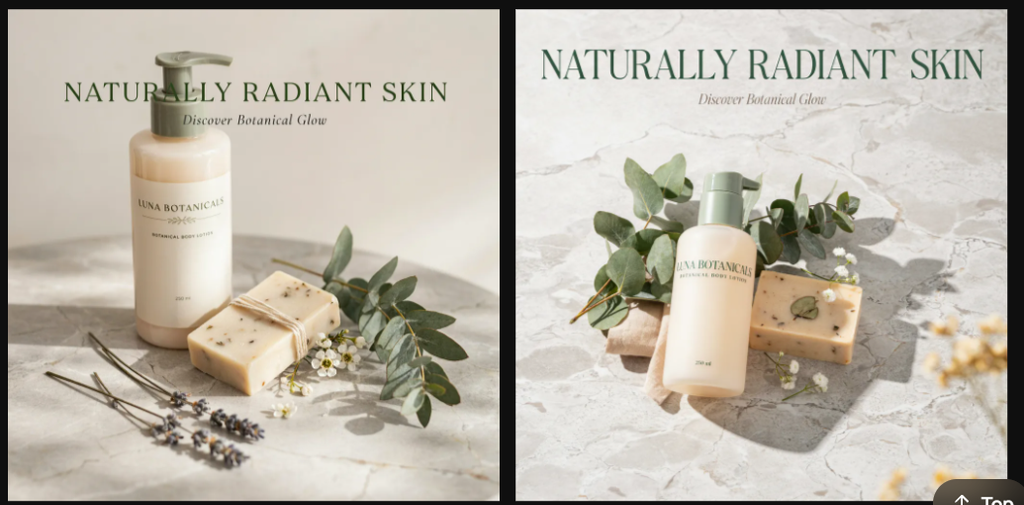
Some compositions appeared unbalanced, while others featured packaging that lacked the professional detail seen in Design.com’s output.
The images were visually appealing but felt more like initial concepts than finished advertisements.
Verdict: Design.com earned 10/10 for image quality compared with Ideogram’s 8/10, thanks to its stronger composition, detailed packaging, and polished product presentation.
Round 3: Which Handles Text and Typography Better?
Winner: Tie — 10/10 each
Readable text is essential for marketing graphics.
A promotional image loses value when its headline contains misspellings or distorted characters.
Ideogram is particularly well known for generating typography within AI images, making it a compelling option for posters, advertisements, and graphics featuring headlines.
Our tests confirmed its strengths.
Both Instagram advertisements and website banners contained readable promotional text without obvious spelling errors.
However, Design.com performed equally well.
Its first image displayed “NATURALLY RADIANT SKIN” clearly, while the second correctly incorporated “GLOW NATURALLY.”
Design.com also added additional branding details to the generated product packaging without noticeably garbling the text.
Verdict: Both platforms received 10/10 for text accuracy. Ideogram demonstrated its established typography strengths, but Design.com matched its performance in our tests.
Round 4: Which Maintains Better Brand Consistency?
Winner: Design.com — 10/10 vs 9/10
Brand consistency becomes especially important when creating multiple marketing graphics for the same campaign.
A business might need Instagram advertisements, website banners, promotional posters, and presentation graphics that all share a recognizable visual identity.
For our second test, we asked both platforms to create a website banner while maintaining Luna Botanicals’ original branding.
Design.com: Consistent Across Both Formats
Design.com’s banner successfully retained the same overall visual identity as its Instagram advertisement.
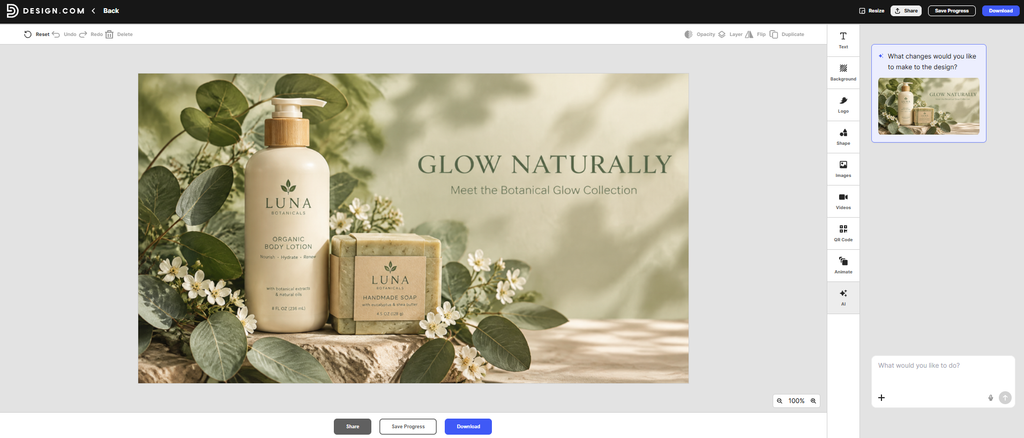
The cream-colored lotion bottle, matching soap, green botanical elements, and warm lighting remained consistent.
Typography and product packaging also followed the original aesthetic.
The two images looked like complementary pieces from the same marketing campaign.
Ideogram: Similar Style, Less Consistent Packaging
Ideogram also maintained the general botanical theme.
Its website banner concepts used similar color palettes, product arrangements, and minimalist backgrounds.
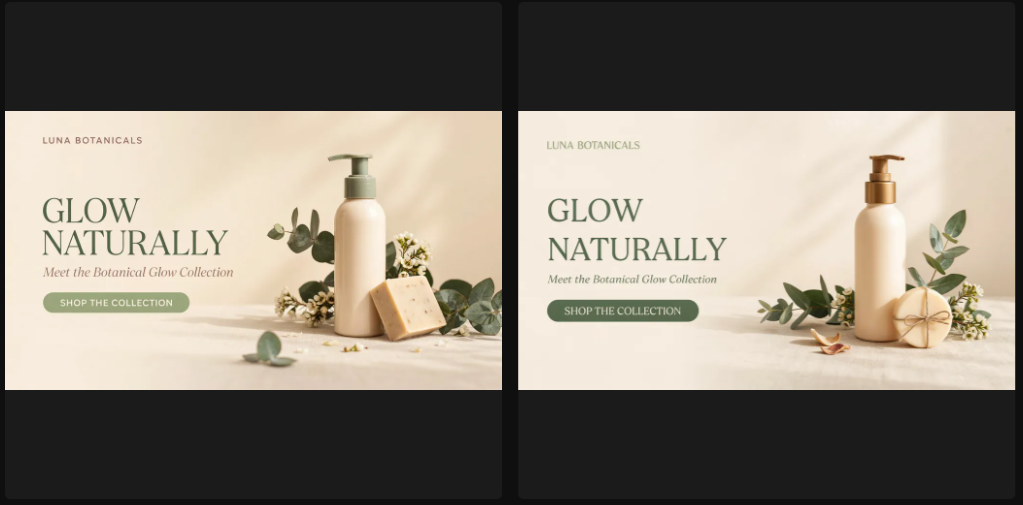
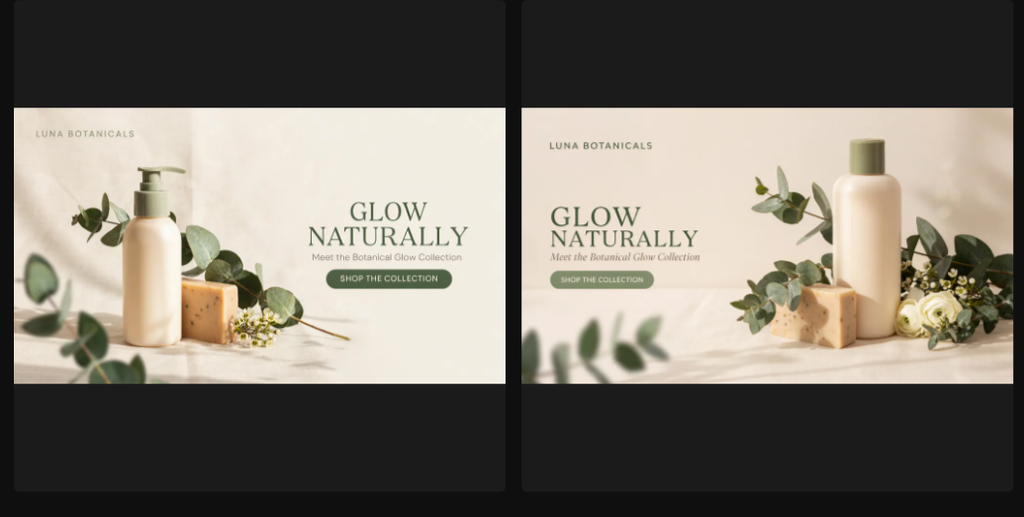
However, the packaging appeared less developed than Design.com’s results. Some labels lacked detail, and the product presentation varied between concepts.
The designs would likely require additional editing to create a fully coordinated campaign.
For businesses establishing a recognizable identity, choosing appropriate brand assets is an important starting point. This guide to AI logo makers for different types of businesses explores how branding needs vary across industries.
Verdict: Design.com scored 10/10 for brand consistency, narrowly ahead of Ideogram’s 9/10.
Round 5: Which Produces More Marketing-Ready Graphics?
Winner: Design.com — 10/10 vs 5/10
This category produced the largest scoring difference.
A marketing-ready graphic should require minimal editing before it can be published.
The image should have accurate text, professional composition, recognizable branding, and appropriate product presentation.
Design.com: Nearly Ready to Publish
Both Luna Botanicals images looked polished straight from generation.
The product packaging contained convincing branding, the headlines were readable, and the compositions were balanced.
We could envision using the images in an advertising campaign with only minor adjustments, subject to normal checks for product accuracy and usage rights.
Design.com also integrates image generation with additional branding tools, allowing businesses to incorporate generated visuals into finished marketing materials.
For example, users can combine generated images with logos, text, and brand colors through its social media post generator.
Ideogram: More Editing Required
Ideogram produced attractive concepts, but several lacked the finished product details required for professional advertising.
The second test highlighted this limitation.
Although the website banners maintained an appealing minimalist aesthetic, the product packaging looked unfinished.
Additional editing would be necessary to create convincing, coordinated product advertisements.
Verdict: Design.com received 10/10 for marketing readiness, while Ideogram scored 5/10.
Round 6: Which Is Easier to Edit?
Winner: Design.com — 10/10 vs 5/10
Generating an image is only one stage of creating marketing content.
Businesses often need to adjust layouts, incorporate logos, modify text, and adapt graphics to different formats.
Design.com performed particularly well because its AI image generator connects with a broader design ecosystem.
You can refine prompts, use image editing features, remove backgrounds, and incorporate visuals into customizable templates.
The platform also provides 50+ additional design tools, including social media graphics, flyers, posters, business cards, and presentations.
Ideogram offers image-editing capabilities, including tools for modifying specific elements and exploring creative variations.
However, for our marketing workflow, its generated images needed more finishing work, and the platform offered less direct support for assembling complete branded materials.
The importance of connected creative workflows also applies to presentations. This comparison of AI presentation makers explores tools designed to simplify the creation of professional visual content.
Verdict: Design.com scored 10/10 for ease of editing, compared with Ideogram’s 5/10, based on our overall experience preparing marketing graphics.
Design.com vs Ideogram: Features and Pricing
Beyond the test results, both platforms offer different advantages depending on what users want to create.
| Feature | Design.com | Ideogram |
| Text-to-image generation | Yes | Yes |
| Natural-language prompts | Yes | Yes |
| AI image editing | Yes | Yes |
| Brand integration | Logos, colors, fonts, templates | Style and image references |
| Social media design tools | Yes | Primarily image generation |
| Broader marketing tools | 50+ integrated tools | Specialized image tools |
| Free access | Free generation | Free access with limits |
| Entry paid pricing | $3/month annually* | $15/month annually for Plus* |
| Best for | Branded marketing graphics | Typography and creative imagery |
Check current plans, credit allowances, and billing terms before publication.
Design.com’s AI Design Plan includes 50 monthly AI-generated images, image editing, and access to additional design tools and templates.
Its broader branding ecosystem makes it particularly attractive for businesses creating multiple types of visual content.
Ideogram may offer better value for users who primarily want a dedicated image generator and do not require integrated branding tools.
For businesses planning to build a consistent online identity, combining design tools can simplify the process. This comparison of all-in-one website builders examines a related approach to connected branding and website creation.
Who Should Choose Design.com or Ideogram?
Choose Design.com If You Want a Complete Marketing Workflow
Design.com is the better choice for marketers, entrepreneurs, and small businesses that need professional imagery without complicated design processes.
Our tests demonstrated its ability to produce detailed product visuals, preserve a consistent brand identity, and generate graphics requiring minimal additional work.
Its connected design tools make it particularly useful for creating content across multiple marketing channels.
Choose Ideogram If You Prioritize Standalone AI Image Generation
Ideogram is worth considering if you primarily need AI-generated imagery rather than complete marketing materials.
It interpreted our original prompts without modification, generated multiple concepts, and delivered excellent text accuracy.
Its minimalist creative style can also appeal to users developing product concepts, posters, and typography-focused visuals.
However, additional editing may be needed to transform its outputs into finished marketing campaigns.
Final Verdict: Design.com Is the Best AI Image Generator for Marketing Graphics
Design.com wins our 2026 comparison with an overall score of 9.8/10, outperforming Ideogram’s 7.7/10.
Both platforms demonstrated strong prompt interpretation and excellent text accuracy, earning identical scores in those categories.
However, Design.com delivered better image quality, stronger branding consistency, greater marketing readiness, and a more convenient editing workflow.
Its Luna Botanicals advertisements featured convincing product photography, detailed packaging, and consistent typography across different formats.
Ideogram remains a capable alternative for standalone image generation and typography-focused creative work.
But for businesses that want to move efficiently from an idea to a polished, branded marketing graphic, Design.com is the clear overall winner based on our tests.
Frequently Asked Questions
Is Design.com better than Ideogram for marketing graphics?
Yes. Design.com scored 9.8/10 compared with Ideogram’s 7.7/10 in our Luna Botanicals comparison. It performed better in image quality, brand consistency, marketing readiness, and ease of editing.
Which AI image generator creates better product advertisements?
Design.com performed better in our test, scoring 10/10 for image quality against Ideogram’s 8/10. Its product advertisements featured polished compositions, realistic packaging, and convincing branding.
Is Ideogram better than Design.com at generating text?
Both platforms received 10/10 for text accuracy. Neither produced obvious garbled headlines in our two tests, although Ideogram remains particularly focused on typography-based image generation.
Which is better for brand consistency: Design.com or Ideogram?
Design.com scored 10/10 for brand consistency, compared with Ideogram’s 9/10. Its Instagram advertisement and website banner maintained similar packaging, fonts, colors, and overall styling.
Which AI image generator is best for small businesses?
Design.com is the better overall option for small businesses that need professional product images, social media advertisements, and consistent branded marketing materials. Its connected design tools make it easier to turn AI-generated images into finished graphics.